At the recent MRI Ascend conference in Chicago, VTS joined the country’s top innovators to discuss the digital transformation of commercial real estate. From receiving the 2023 Customer Impact Partner of the Year award to Chief Product Officer Gijo Mathew’s session on real-time data, the event highlighted how technology is reshaping human-centric decision-making.
Emerging Technologies: AI as a Tool, Not a Replacement
Since the debut of ChatGPT and Large Language Models (LLMs), AI has become central to digital strategies. In CRE, AI is revolutionizing administrative efficiency:
- Marketing Automation: Generative AI is being used for copywriting social posts, blogs, and listings.
- Financial Modeling: Large-scale modeling and data management are now being partly handled by AI tools.
However, Gijo Mathew emphasized that AI is a tool, not a solution in itself. It is not at the point of replacing human decision-makers; rather, it is freeing up asset managers to focus on strategic outcomes.
Data Management: Solving the "Siloed System" Challenge
As MRI CEO Patrick Ghilani noted, data is only as good as our understanding of it. With millions of data points living in disconnected systems, the 2024 priority for successful businesses is a "back-to-basics" approach:
- Tech Stack Consolidation: Moving away from silos toward consolidated platforms.
- Cybersecurity: Heightened vigilance against fraud and phishing is essential as AI-driven security threats emerge.
- Data Cleanup: Prioritizing efficient management and security is now a non-negotiable step toward success.
Economic Factors: Navigating the "New Normal" in 2024
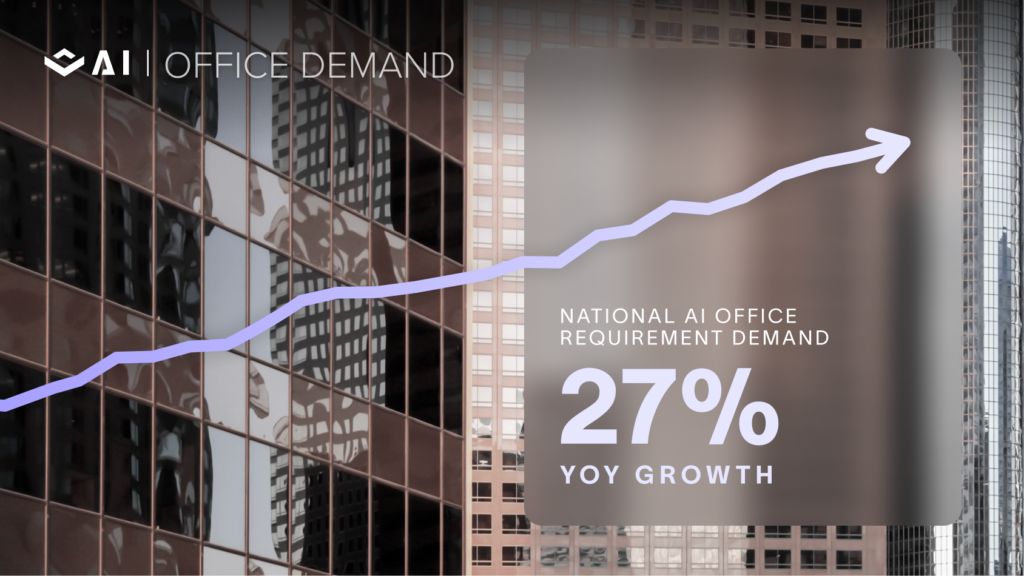
The real estate landscape is adapting to a climate of hybrid work, high interest rates, and loan maturities. While office demand is down, other sectors are showing remarkable resilience.
| Sector | Key Statistic | Market Insight |
| Retail | 18% Increase | Strip mall traffic is up 18% compared to pre-pandemic levels. |
| Inflation | Stabilizing | Rent is stabilizing nationwide, offering a more predictable market. |
| Office | Adapting | Underperforming office spaces are being reimagined as vibrant mixed-use environments. |
The Multifamily Shift: Conversions and Resident Expectations
Multifamily remains a primary focus for investors. The Biden administration has announced a plan to accelerate office-to-multifamily conversions with $35B in below-market loans.
Despite this support, logistical challenges remain: less than 1% of multifamily deliveries over the past two decades have come from office conversions. For existing buildings, the focus has shifted to building differentiation to attract and retain residents in a competitive market.
Looking Forward: The Role of Human-Centric Strategy
AI is only as good as the data fueling it. As we move into the future, the industry's digital transformation requires a thoughtful evaluation of tech stacks. While generative AI will likely shape our lives, humans are needed now more than ever to guide these strategic decisions and ensure data is organized and analyzed correctly.
MRI Ascend & CRE Tech FAQs
1. How is generative AI used in commercial real estate marketing?
Generative AI is used to automate mundane administrative tasks such as copywriting for social media, property blogs, and listings. This reduces daily manual work and allows leasing teams to focus on strategic deal-making.
2. Why is tech stack consolidation a priority for 2024?
Consolidation removes data silos and promotes transparency across teams. It simplifies the complex decision-making process caused by having too many disconnected systems and helps organizations build a robust cybersecurity foundation.
3. What is the status of office-to-multifamily conversions?
While the government has provided $35B in potential loans to support conversions, they are logistically difficult. Historically, office conversions account for less than 1% of total multifamily deliveries, meaning owners must still focus on differentiating existing assets to stay competitive.